Appointment Setting Services: How to Book More Sales Meetings
Appointment setting services explained: how outsourced SDRs book sales meetings, the channels they use, pricing models, metrics and how to choose a partner.
In this article
Appointment setting services use trained outbound reps to contact potential customers, qualify their interest and book sales meetings straight into your calendar. Your closers spend their time in conversations instead of chasing replies.
Why companies outsource appointment setting
Prospecting is time-consuming, repetitive and easy to drop when salespeople are busy closing deals. A dedicated setter keeps outreach consistent every day. For many service businesses, a steady flow of qualified meetings is the single biggest lever on growth.
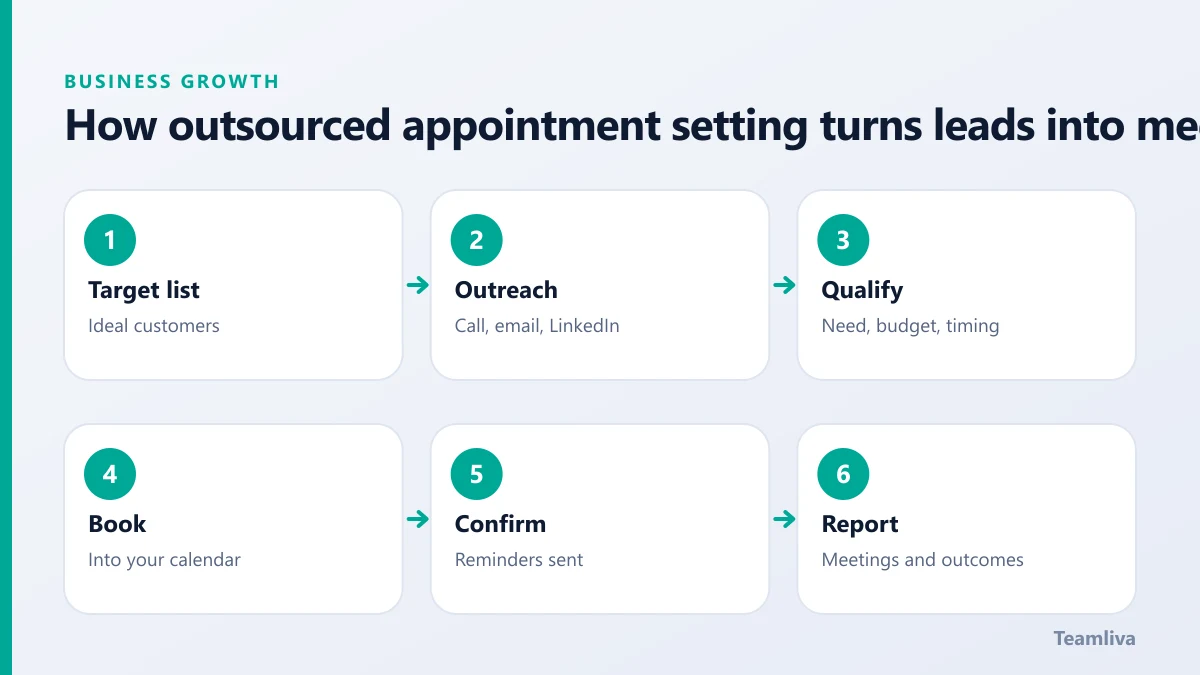
How the process works
- Define your ideal customer: industry, company size, job titles and location.
- Build a target list from your CRM and data sources.
- Write messaging for calls, emails and LinkedIn, based on real customer problems.
- Run outreach in sequences over several weeks.
- Qualify interest against agreed criteria, such as need, budget and timing.
- Book the meeting into your calendar with notes, then send reminders.

Channels that work
- Phone for fast, two-way conversations.
- Email sequences for scale and follow-up.
- LinkedIn for B2B decision makers.
- Inbound follow-up on website forms and webinar sign-ups, often the warmest leads.
Combining channels usually beats relying on one. Our guide to digital marketing for small businesses shows how outbound fits with your wider marketing.
Pricing models
- Monthly retainer for a dedicated setter: predictable cost and the most control.
- Pay per appointment: you pay for each qualified meeting booked.
- Base plus bonus: a lower retainer with a bonus per meeting that actually happens.
Pay-per-appointment sounds safe but can reward quantity over quality. Agree a clear definition of a qualified meeting whatever model you choose.
Metrics to track
Track connect rate, reply rate, meetings booked, show rate, meetings that turn into opportunities and revenue won. Meetings booked is only useful if those meetings become pipeline.
How to choose a partner
Ask for examples of messaging in your industry, how reps are trained, how they qualify, whether they work inside your CRM and who owns the data and contact lists. Start with a pilot of four to eight weeks. Our article on how to choose a BPO company offers a wider checklist.
Writing outreach messages that get replies
Generic messages get ignored. The best outreach is short, specific and about the prospect’s problem rather than your company. Open with something relevant to their business, name one problem you solve for companies like theirs, give a short piece of evidence and ask for a small next step, such as a fifteen-minute call. Avoid long introductions, attachments and lists of every service you offer.
Test two or three versions of each message and keep the one that earns the most replies. Small changes to the first line or the request often make a large difference.

Defining a qualified meeting
The most common cause of disappointment is a weak definition of "qualified". Before outreach starts, agree in writing what a meeting must include: the right job title or decision role, a company that fits your ideal customer profile, a real problem you can solve and a reasonable timeframe. Ask setters to record why each meeting qualifies in the calendar invite so your closers can prepare and give feedback.
Getting value from feedback
Closers should rate every meeting within a day: qualified, unqualified or no-show, with a short reason. Share those ratings with the setting team every week. That feedback loop is what turns a new outsourced team into a reliable source of pipeline within a couple of months.
Keeping your data and reputation safe
Outreach is done in your company’s name, so agree sending limits, opt-out handling and messaging approval before launch. Make sure contact lists and conversation history stay in your CRM, not in the provider’s systems, so you keep the data if you change partners.
Building a repeatable pipeline
Treat the first two months as a learning period. Expect the list, the messaging and the qualification rules to change as you see which prospects turn into real opportunities. By month three, you should know which industries and job titles respond best, which channel books the most meetings and how many meetings your closers need each week to hit their targets. That knowledge is as valuable as the meetings themselves.
Key takeaways: appointment setting services
- Appointment setting services contact prospects, qualify interest and book meetings straight into your calendar.
- Combine phone, email, LinkedIn and fast inbound follow-up rather than relying on one channel.
- Agree a written definition of a qualified meeting before outreach starts, whatever the pricing model.
- Track meetings that become opportunities and revenue, not just meetings booked.
- Keep contact lists and history in your own CRM, and start with a four to eight week pilot.

How Teamliva helps
Teamliva (Team Liva) provides dedicated appointment setters and lead generation reps for US and UK businesses, working your CRM on your hours. See our sales and lead generation outsourcing services or contact us to plan a pilot.
For background on the role, see sales development on Wikipedia.
Frequently asked questions
What do appointment setting services do?
They reach out to potential customers by phone, email and LinkedIn, qualify interest and book meetings directly into your sales team’s calendar.
How are appointment setting services priced?
Common models are a monthly retainer for a dedicated setter, pay per qualified appointment, or a base fee plus a bonus per meeting held.
How long does it take to see results?
Expect two to four weeks of list building, messaging tests and training before meeting volume becomes steady.
- #Teamliva
- #TeamLiva
- #DigitalMarketing
- #SEO
- #BusinessGrowth
- #AppointmentSettingServices
- #OutsourcedSdr
- #B2bLeadGeneration
- #SalesOutsourcing