Digital Marketing for Small Business: The Basics That Actually Work
Small businesses do not need a giant budget to grow online. Start with these digital marketing basics: search, content, email, social and simple measurement.
In this article
Marketing can feel overwhelming when you are also running the business. There are dozens of channels and every expert seems to recommend something different. The good news is that digital marketing for small business does not need to be complicated. A few solid foundations do most of the work.
Step 1: Get the foundation right
Everything points back to your website. Before spending on promotion, make sure visitors can:
- Understand what you do within seconds.
- See proof that you are trustworthy.
- Contact you easily.
Read website design for service businesses for a practical checklist.
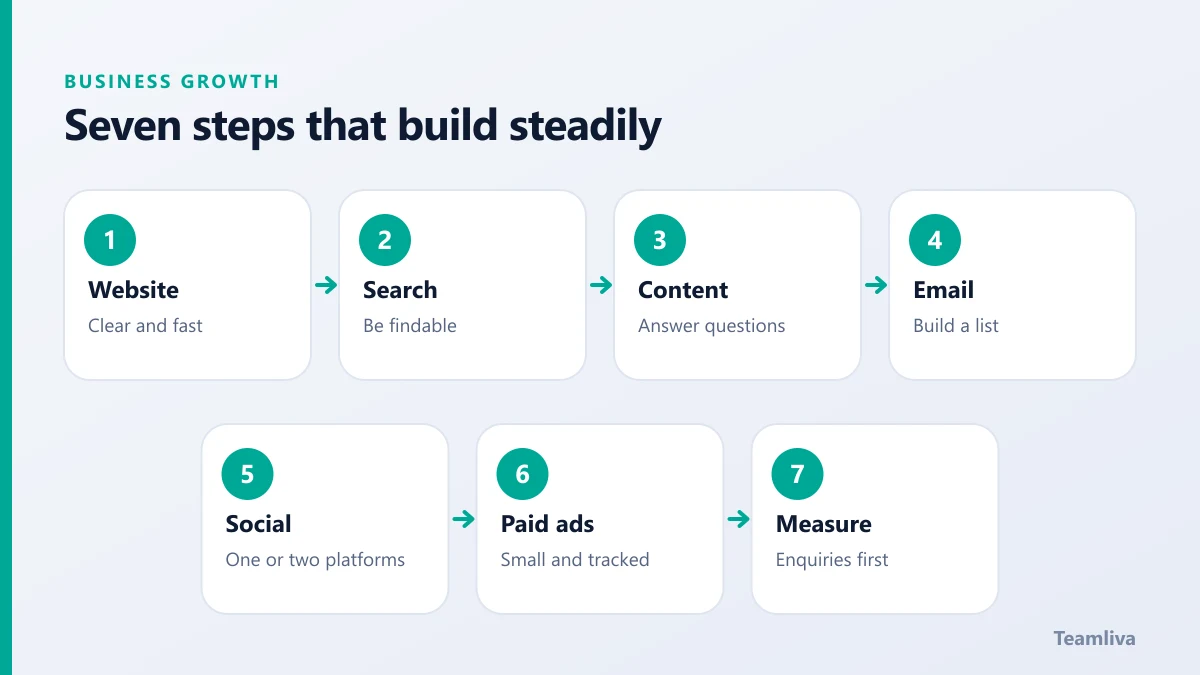
Step 2: Be findable in search
Most customers start by searching. Show up when they do.
- Research the phrases your customers actually use.
- Give each service its own page with a clear title and headings.
- Keep your details consistent across your site and business listings.
- Ask happy customers for reviews.
- Make the site fast and mobile-friendly.
Our SEO for service businesses beginner's guide covers this in more depth, and Google's SEO starter guide is a good free reference.

Step 3: Create helpful content
Content earns trust and attracts search visitors over time. Write articles and guides that answer real customer questions.
- Base topics on questions you hear every week.
- Be specific and honest, and avoid fluff.
- Link each piece to the relevant service page.
- End with a clear next step.
- Update older pieces when things change.
A steady schedule beats occasional bursts. One good article a month is a solid start.
Step 4: Build an email list
Email lets you reach interested people without paying for each click. Offer something useful, such as a guide or checklist, in exchange for a sign-up. Then send helpful, occasional messages. Keep them short, clear and relevant. Always make unsubscribing easy.
Step 5: Use social media selectively
You do not need to be everywhere. Pick the one or two platforms where your customers spend time. Share useful tips, behind-the-scenes updates and customer stories. Scheduling posts in batches saves effort, and a virtual assistant can handle the scheduling for you.
Step 6: Consider paid advertising carefully
Paid ads can bring quick traffic, but they can also waste money. If you try them:
- Send visitors to a page built for that offer, not the home page.
- Start with a small budget.
- Track enquiries, not just clicks.
- Pause what does not work.
Step 7: Measure what matters
Decide on a few numbers and check them monthly:
- Website visits by source.
- Enquiries, by form, phone and email.
- Cost per enquiry for paid campaigns.
- Reviews gained.
The goal is to learn what brings real customers, then do more of it.
Save time with delegation
Marketing has many repeatable tasks: formatting posts, scheduling, updating listings, researching keywords and reporting. Delegating them frees you to focus on strategy and customers. See virtual assistant tasks to delegate.

Common mistakes
- Spreading effort across too many channels.
- Skipping the website basics.
- Judging results after two weeks.
- Never tracking enquiries.
Setting a simple plan for digital marketing for small business
A plan does not need to be long. One page is enough.
- Goal. For example, ten qualified enquiries a month.
- Audience. Who exactly do you want to reach, and what do they need?
- Channels. Choose one or two to begin with.
- Content. List the questions you will answer in the next three months.
- Budget and time. Decide what you can commit to each week.
- Review date. Set a monthly check on the numbers.
Local and reputation marketing
Many service businesses win work locally or through referrals. Keep your business profile accurate, and reply to every review politely. Ask satisfied customers for feedback shortly after finishing a job, while the experience is fresh. Add reviews to your website with permission. Consistent details and honest replies build trust in a way advertising cannot.
Email and follow-up
Most enquiries do not turn into customers on the first contact. A short, friendly follow-up sequence helps: thank people for getting in touch, share a useful resource and check in after a few days. Keep messages personal and relevant, and never send anything that would surprise the reader.
What to skip at the start
- Buying followers or bulk email lists.
- Trying every new platform at once.
- Complicated tools before you have consistent traffic.
- Long contracts with agencies that cannot show clear reporting.
Google's own SEO starter guide is free, practical and a good companion to this article. When you are ready to go deeper, our guide to website design for service businesses covers the site itself.
How Teamliva helps
Teamliva supports growth with digital marketing, SEO-friendly websites, branding and design, alongside remote teams that handle the operational work. Explore our digital marketing and growth services, see graphic design or get in touch.

The takeaway
Digital marketing for small business works when you build a strong website, become findable, publish helpful content and measure results. Start small, be consistent and expand what works.
Frequently asked questions
Where should a small business start with digital marketing?
Start with a clear website and your search presence, including a business profile where relevant. Then add helpful content and email. Build one channel properly before adding the next.
How long does digital marketing take to work?
Paid advertising can bring traffic quickly, while search and content usually take months to build. Set expectations by channel and review results regularly.
How much should I spend?
Begin with an amount you can sustain, track results carefully and increase spending only on what proves to bring enquiries.
- #Teamliva
- #TeamLiva
- #DigitalMarketing
- #SEO
- #BusinessGrowth
- #SmallBusiness
- #ContentMarketing