Brand Identity Design: What a Complete Package Includes
Brand identity design is more than a logo. See what a complete package includes, from strategy and visual system to guidelines and marketing assets, and how to brief a designer well.
In this article
Brand identity design is the work of giving a business a consistent, recognisable look and voice. Many people think of it as a logo. In practice, the logo is only one piece of a larger system that helps customers recognise you and trust you.
This guide explains what a complete package includes and how to get the best result from a designer.
Brand identity versus branding versus a logo
The terms overlap, but they mean different things.
- A logo is a mark that identifies you.
- Brand identity is the visual and verbal system around that mark.
- Branding is the wider process of shaping how people perceive you, including service and reputation.
A good identity supports the brand by making every touchpoint feel like it comes from the same company.
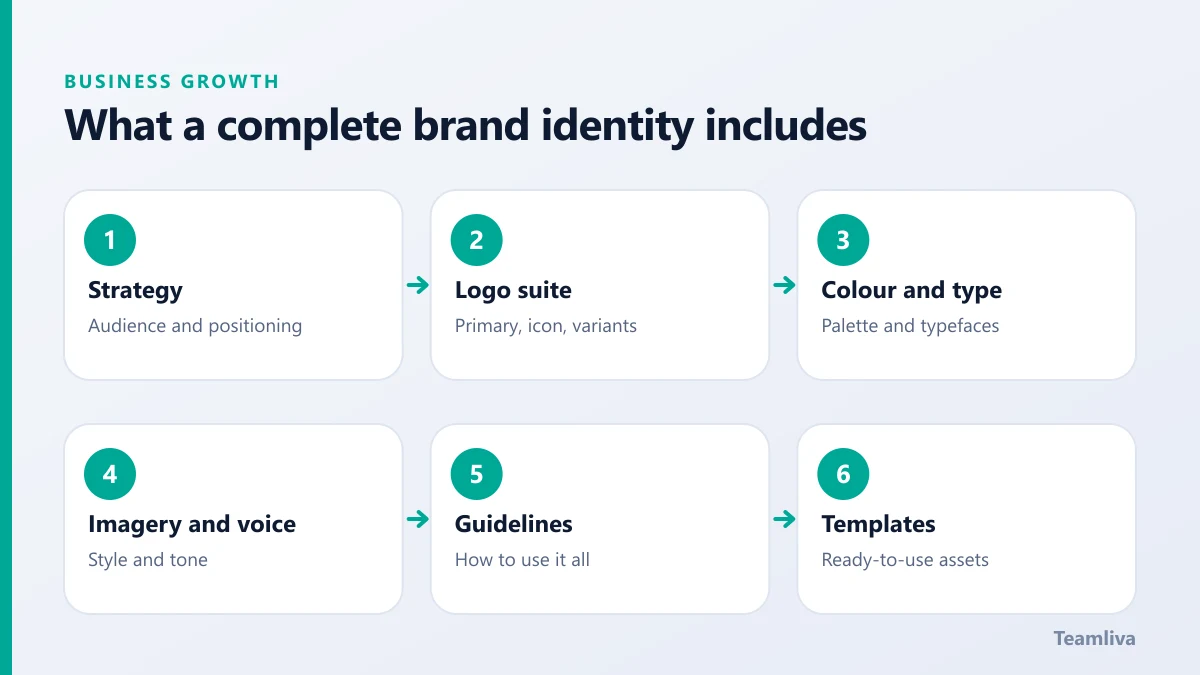
What brand identity design includes
1. Strategy and research
Strong design starts with questions. Who are your customers? What makes you different? What should people feel when they meet your brand? Answers here guide every later choice.
2. Logo suite
A professional package includes more than one logo file. Expect a primary logo, a compact version for small spaces, an icon or monogram and versions for light and dark backgrounds.
3. Colour palette
The palette defines primary and secondary colours with exact values for screen and print. It should also cover accessible combinations, so text stays readable.
4. Typography
A set of typefaces for headlines, body text and interface use, with rules on sizes and spacing.
5. Imagery and graphic elements
Guidance on photography style, icons, illustrations, patterns and other supporting visuals.
6. Voice and messaging
Tone-of-voice notes, taglines and key phrases keep written material consistent with the visual side.
7. Brand guidelines
A guidelines document ties everything together. It shows how to use each element, and how not to. Without it, the identity drifts as more people create materials.
8. Applications and templates
Ready-to-use designs for your most common materials, such as business cards, presentations, social media graphics, email signatures and stationery.
How UI and UX fit in
If your brand lives mainly on a website or an app, the identity must work as an interface system as well. That includes buttons, forms, spacing and states. Designing these early keeps your product and your marketing aligned. Teamliva's graphic design services cover brand identity, UI and UX systems and marketing collateral together for this reason.
How to brief a designer
A clear brief saves weeks. Prepare:
- A short description of the business and its audience.
- Your goals for the identity.
- Examples you like, and examples you dislike, with reasons.
- Where the brand will appear, such as web, print or packaging.
- Practical limits, such as budget, deadlines and legal names.
- One decision maker who can give consolidated feedback.
Mistakes to avoid
- Following trends that will look dated soon.
- Too many colours or fonts, which weaken recognition.
- Ignoring accessibility, such as low-contrast text.
- Skipping the guidelines, then losing consistency.
- Designing by committee, which dilutes strong ideas.
Connecting design to growth
A distinctive identity helps every other marketing effort. It makes your website more credible, and it makes content memorable. If you are building your presence online, pair it with SEO for service businesses and a site built to convert. If you need a portal or app to match the brand, see our guide to secure client portal development.
For deeper reading on visual accessibility, the WCAG guidelines set out contrast and readability standards worth building into your palette from day one.
Signs your brand identity needs a refresh
A new identity is not always the answer, but these signals suggest it may be time.
- Your materials look different from one another.
- Your logo is hard to read at small sizes or on dark backgrounds.
- You have grown into new services the old brand does not reflect.
- Competitors look the same as you.
- Your website and printed materials feel like they come from different companies.
Measuring the result
Design is easier to defend when you can see the effect. After a rebrand, watch:
- Consistency, meaning how often materials follow the guidelines.
- Website engagement, such as time on page and enquiries.
- Recognition, through simple customer surveys.
- Speed of production, because good templates save hours every month.
The point of brand identity design is not decoration. It is a system that makes every future decision faster and every message clearer.
Rolling out a new identity
Launching a new identity is a project in itself. Start with the highest-visibility items, such as your website, social profiles and email signatures. Then update printed materials and templates in order of use. Tell your team and customers what is changing and why, and share the guidelines with everyone who creates content. A short internal launch, with examples of the identity in use, helps people adopt it quickly and avoids a patchwork of old and new styles.
The takeaway
Brand identity design is a system, not a single image. A complete package includes strategy, logos, colour, type, imagery, voice and guidelines, so your business looks and sounds consistent everywhere. To start a project, get in touch.
Frequently asked questions
What is the difference between a logo and a brand identity?
A logo is one element. A brand identity is the whole system: logo, colours, typography, imagery, tone of voice and the rules for using them consistently across every touchpoint.
How long does brand identity design take?
A typical project takes several weeks, depending on research, the number of concepts and revision rounds. Clear briefs and quick feedback shorten the timeline.
What files should I receive at the end?
Vector logo files in several formats, colour palettes with exact values, font information, a brand guidelines document and ready-to-use templates for your most common materials.
- #brand identity
- #graphic design
- #logo design
- #ui ux