
Virtual Assistant for Lawyers: Tasks, Ethics and How to Get Started
A legal virtual assistant can handle scheduling, client intake, document formatting and billing admin. Learn the tasks, confidentiality duties and how to delegate safely.
In this article
A legal virtual assistant is a remote administrator who supports a law firm with intake scheduling, calendar management, document formatting and billing admin under a lawyer’s supervision. They do not give legal advice; the lawyer stays responsible for the work.
Solo practitioners and small firms carry a heavy administrative load: intake calls, scheduling, formatting documents, chasing signatures and billing. A legal virtual assistant handles the administrative side so lawyers can spend time on legal work. The stakes are higher than in many industries, because client confidentiality and professional duties apply. Here is how to delegate safely.
This article is general information, not legal or ethical advice. Rules differ by jurisdiction, so check your own bar’s guidance on outsourcing and supervision.
Tasks that suit a legal virtual assistant
- Client intake administration: scheduling consultations, sending intake forms and recording contact details.
- Calendar management: court dates, deadlines and meeting reminders that you confirm.
- Document formatting: applying your templates, checking page numbers, tables of contents and citations for formatting only.
- File organisation: naming and filing documents in your case management system.
- Correspondence drafts: routine emails prepared for a lawyer to review and send.
- Billing support: time entry checks, invoice preparation and payment reminders.
- Research support: locating publicly available information or forms, checked by a lawyer.
Compare this with the general list in virtual assistant tasks to delegate.
What stays with the lawyer
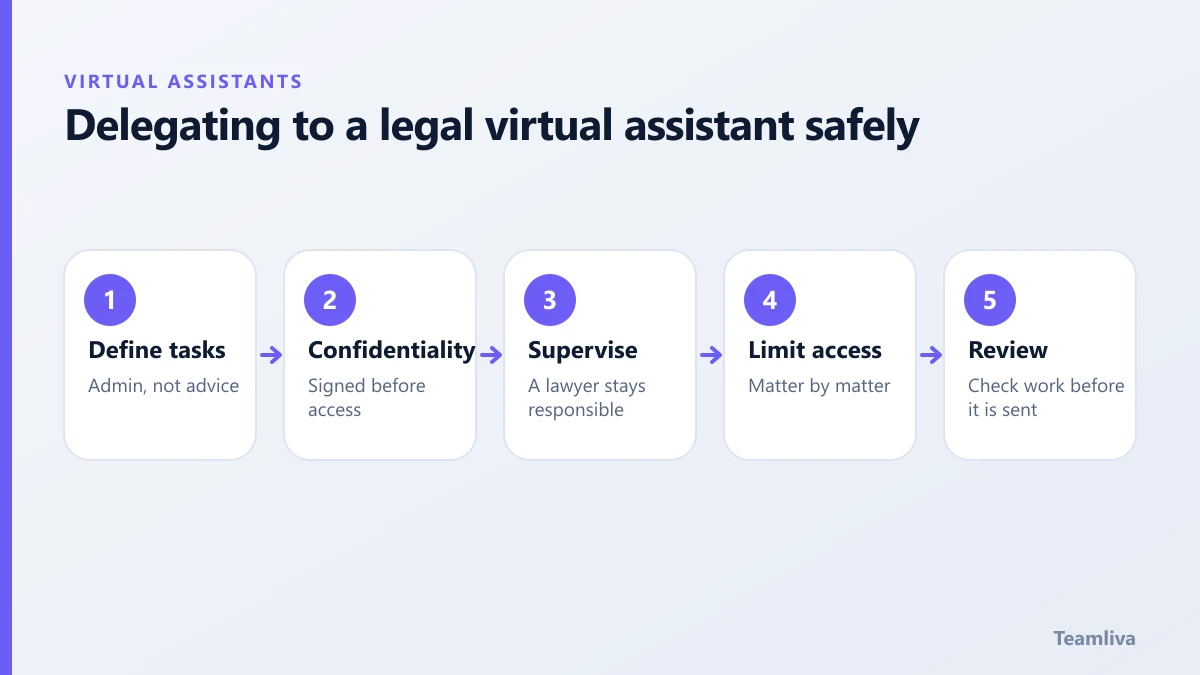
Legal advice, drafting of substantive legal arguments, decisions on strategy and any work restricted to licensed lawyers must remain with a qualified lawyer. The lawyer stays responsible for the assistant’s work, so supervision is essential. The American Bar Association publishes professional-responsibility resources, and your state or national bar may have specific rules on outsourcing.

Confidentiality first
Client information is privileged and confidential. Before an assistant sees anything:
- Sign a confidentiality agreement; see the contract and NDA checklist.
- Give access matter by matter, not to the entire practice system.
- Use unique logins and multi-factor authentication.
- Keep client files in your systems rather than on the assistant’s devices.
- Agree how conflicts checks and new-matter information are handled.
- Remove access the day the engagement ends.
Read more in virtual assistant data security.
Supervision and quality control
Set a rule that nothing goes to a client or court without a lawyer’s review, unless it is a template-based administrative message you have pre-approved. Keep a checklist for each recurring task, and review samples regularly.
A practical starting plan
- Choose one repeatable process, such as new-client intake.
- Write it as a step-by-step guide with examples.
- Run a paid trial with a small set of matters.
- Review every output for the first two weeks.
- Widen the scope only when errors are rare.
Managed provider or freelancer?
Because of the confidentiality duties, many firms prefer a provider that supplies controlled devices, a signed agreement and supervision, and can replace an assistant without losing knowledge. See virtual assistant vs employee vs freelancer.

A sample workflow: new-client intake
- A prospective client submits a form or calls the firm.
- The assistant records the details, checks them against your conflict-check process and books a consultation.
- The assistant sends the intake questionnaire and engagement letter template for the lawyer to approve.
- After the consultation, the lawyer decides whether to accept the matter.
- If accepted, the assistant sets up the matter file in your system, using your naming rules.
The assistant never decides who becomes a client or what advice they receive. They keep the administrative steps moving.
Questions to ask before you delegate
- Does my jurisdiction have rules about supervising non-lawyer assistants and outsourcing?
- Does my malpractice insurer have requirements or exclusions?
- What client consent, if any, is needed before a third party sees their information?
- How will I keep privileged material out of any tool that stores or trains on data?
Building a checklist culture
Law firms benefit from short, written checklists: intake, new matter, closing, billing. A checklist protects clients, supports supervision and makes the assistant’s work easy to review. Start with the intake list and add one new checklist a month. Over time you will have a procedures manual that helps every new team member.
Key takeaways: legal virtual assistant
- A legal virtual assistant handles administration only; the lawyer stays responsible for the work and for supervision.
- Check your bar’s rules and your insurer’s requirements on outsourcing before you delegate.
- Give access matter by matter and keep client files in your own systems.
- Nothing should go to a client or court without lawyer review unless it is a pre-approved template message.
- Build checklists for intake, new matters and billing so work is consistent and easy to review.

Ask Teamliva
Teamliva (Team Liva) provides managed virtual assistants for administrative and back-office roles. See our virtual assistant services or contact us to discuss confidentiality requirements for your firm.
Frequently asked questions
What can a legal virtual assistant do?
Client intake scheduling, calendar and deadline reminders, document formatting, file organisation, billing and invoicing administration and correspondence drafts for lawyer review.
Can a virtual assistant give legal advice?
No. Legal advice and other work reserved for lawyers must stay with a qualified lawyer. Assistants perform administrative and support tasks under supervision.
- #Teamliva
- #TeamLiva
- #VirtualAssistant
- #VirtualAssistantServices
- #HireAVirtualAssistant
- #LegalVirtualAssistant
- #LawFirm
- #VirtualAssistantForLawyers
- #ClientIntake