Virtual Medical Scribe: What They Do and How to Hire One
What a virtual medical scribe does, how remote scribing works, the benefits for providers, privacy safeguards to require, and how to hire and onboard one.
In this article
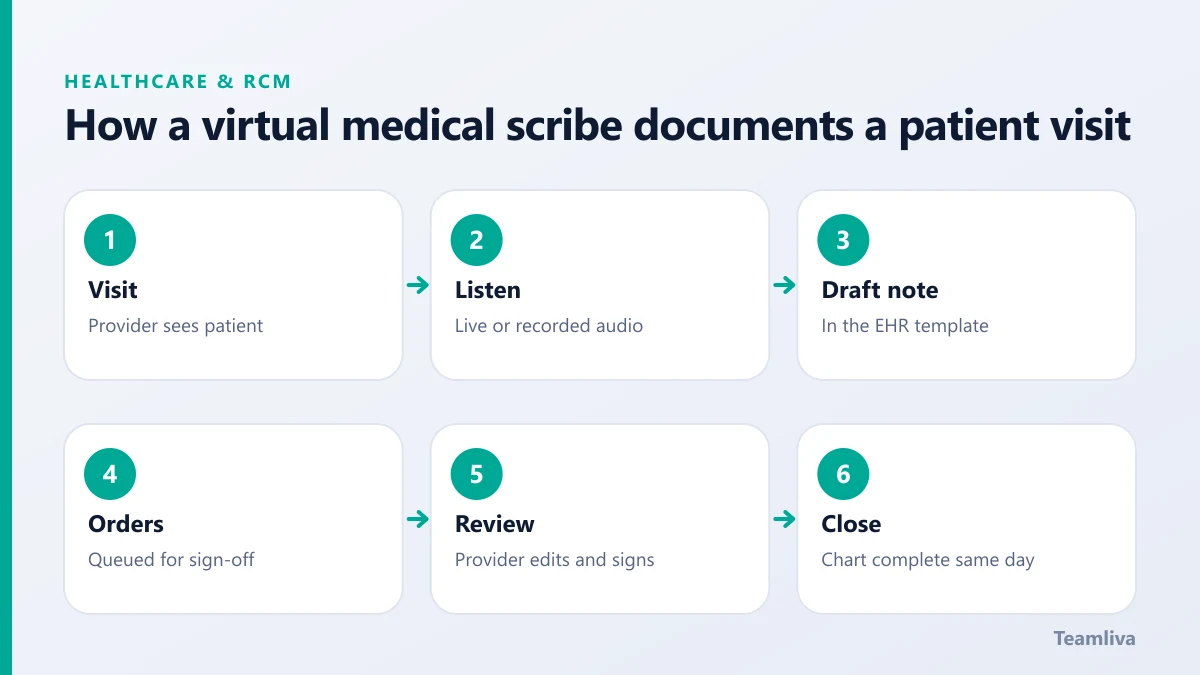
A virtual medical scribe is a trained remote assistant who documents patient visits in the EHR so the provider can focus on the patient. The provider still reviews and signs every note; the scribe takes the typing off their plate.
Why practices use a virtual medical scribe
Documentation takes a large share of a provider’s day, and much of it happens after clinic hours. That is a leading cause of burnout. A scribe shifts most of the typing to someone else, which can mean shorter days, more complete notes and more attention on the patient during the visit.
What a remote scribe does
- Drafts the history, exam findings, assessment and plan in your EHR template.
- Queues orders, referrals and prescriptions for the provider to approve.
- Updates problem lists, medications and allergies as dictated.
- Prepares the chart before the visit with recent results and history.
- Flags missing information so the note is complete for coding.
A scribe does not make clinical decisions, give advice or sign anything. The provider remains responsible for the record.

How remote scribing works
There are two common set-ups:
- Live scribing. The scribe joins the visit through a secure audio or video link and documents in real time. Notes are ready minutes after the visit ends.
- Asynchronous scribing. The provider records the visit on a secure app, and the scribe completes the note shortly afterwards, often the same day.
Both depend on a clear template, agreed abbreviations and a quick review loop with the provider.
Benefits for providers and practices
- Less after-hours charting. Notes are drafted during or soon after the visit.
- Better notes. Consistent, complete documentation supports correct coding and fewer denials. Our guide to medical coding basics explains why that matters.
- More eye contact. Providers spend the visit with the patient rather than the screen.
- Flexible cover. One scribe can support several providers or locations.
Privacy and security safeguards to require
Because a remote scribe hears and records protected health information, require:
- A signed business associate agreement.
- Company-managed devices with encryption and no local storage.
- Role-based EHR access, removed promptly when someone leaves.
- Secure, audited connections for audio and video.
- HIPAA training before the first shift.
Our article on HIPAA compliance for remote teams covers each control in more detail.
How to hire a virtual medical scribe
- Define the work. Specialty, visit volume, EHR, templates and live or asynchronous scribing.
- Test for accuracy. Give candidates a recorded sample visit and score the draft note.
- Check medical vocabulary and English. Terminology errors create rework and risk.
- Agree a review loop. Decide how the provider gives feedback and how quickly.
- Run a pilot. Start with one provider for two to four weeks and measure note turnaround and edits needed.
How scribing fits a wider remote team
Many practices pair a scribe with a remote team for scheduling, eligibility checks and billing. That way the whole visit, from booking to payment, is supported. See our guide to medical virtual assistants for the front-office side.

Measuring whether scribing is working
Agree a few simple measures before you start and review them every month:
- Note turnaround: the time from the end of the visit to a draft ready for sign-off.
- Edit rate: how much the provider changes before signing.
- After-hours charting: time the provider spends on notes outside clinic hours.
- Coding feedback: queries from coders about missing or unclear documentation.
- Provider satisfaction: a short monthly check-in.
Common problems and how to fix them
- Too many edits. Tighten the template and share examples of approved notes.
- Unclear audio. Use a good microphone and a quiet room, or switch to recorded visits.
- Slow sign-off. Set a daily time for the provider to review drafts.
- Inconsistent abbreviations. Keep a shared list and update it as questions come up.
Starting small
Begin with one provider who is keen to try it, refine the template together, and only then extend scribing to colleagues. A good first month builds trust across the practice, and the provider who piloted it becomes the best person to explain the workflow to everyone else.
Key takeaways: virtual medical scribe
- A virtual medical scribe drafts the clinical note in the EHR; the provider reviews and signs it.
- Scribing can run live during the visit or from a secure recording shortly afterwards.
- The main gains are less after-hours charting, more complete notes and more attention on the patient.
- Require a business associate agreement, secured devices, role-based EHR access and HIPAA training.
- Start with one provider, measure turnaround and edits, then extend to the wider practice.

Work with Teamliva
Teamliva (Team Liva) provides trained remote healthcare staff for US practices, working under a business associate agreement on secured workstations. Learn about our telehealth support services or contact us to discuss a pilot.
For an outside view of how documentation burden affects clinicians, the American Medical Association publishes research and guidance on physician burnout and EHR workload.
Frequently asked questions
What does a virtual medical scribe do?
A virtual medical scribe listens to the patient visit, live or from a recording, and drafts the clinical note in the EHR for the provider to review and sign.
Is a virtual medical scribe HIPAA compliant?
It can be, if the scribe works under a business associate agreement, on secured devices, with role-based EHR access and audited, encrypted connections.
What is the difference between a virtual and an in-person scribe?
A virtual scribe works remotely through audio or video, so there is no extra person in the exam room and one scribe can support providers across locations.
- #Teamliva
- #TeamLiva
- #MedicalBilling
- #RCM
- #HealthcareBPO
- #VirtualMedicalScribe
- #RemoteMedicalScribe
- #ClinicalDocumentation
- #EhrDocumentation