Medical Virtual Assistant: How They Support Healthcare Practices
A medical virtual assistant takes on scheduling, insurance verification, reminders and admin so clinicians spend more time with patients. See what they do and how to start safely.
In this article
Healthcare teams spend a large share of the day on administration. Phones, forms, scheduling changes and insurance questions all compete with patient care. A medical virtual assistant can take a meaningful part of that load.
This article explains what the role involves, what it does not, and how to use it safely.
What a medical virtual assistant does
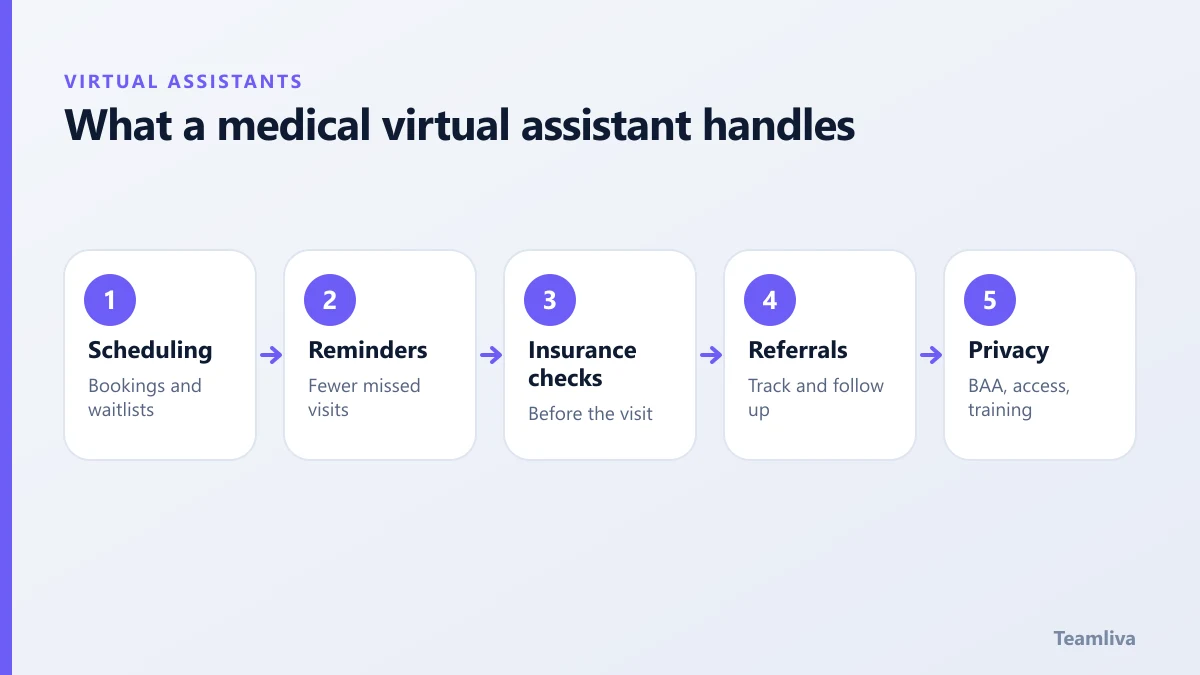
A medical virtual assistant is a trained remote professional who handles administrative and operational tasks for a healthcare practice. Typical duties include:
- Appointment scheduling and rescheduling. Filling gaps, confirming visits and managing waitlists.
- Patient reminders. Calls, texts and emails that help reduce missed appointments.
- Insurance verification. Checking coverage and benefits before the visit.
- Referral and authorization tracking. Keeping requests moving and following up on delays.
- Intake and records support. Collecting forms and updating demographic details.
- Front-desk overflow. Answering routine questions so on-site staff can focus on patients in the building.
What they do not do
A medical virtual assistant does not diagnose, prescribe or give clinical advice. Anything that needs a licensed clinician stays with the clinician. The value is in taking predictable admin work off the team.

Why practices use them
- Capacity on demand. You can add support during busy periods without a long hiring process.
- Consistency. Reminders and follow-ups happen every time, not when someone has a spare minute.
- Better patient experience. Faster answers and fewer missed calls.
- Revenue protection. Accurate insurance checks reduce avoidable denials later. Our guide to medical claim denials shows how much of that starts at the front desk.
Privacy and HIPAA basics
Health information needs extra care. If a medical virtual assistant will see protected health information, put these safeguards in place first:
- A Business Associate Agreement with the provider.
- Role-based access, so the assistant sees only what the task needs.
- Secure devices and connections, with multi-factor authentication.
- Training, so the assistant understands privacy rules and how to report incidents.
- Audit trails, so access can be reviewed.
The US Department of Health and Human Services publishes the rules on its HIPAA information pages. For a practical overview, read our guide to HIPAA compliance for remote teams.
How to get started
- Pick one workflow. Scheduling and reminders are a common first choice.
- Document the process. Include your scripts, rules for double-booking and escalation steps.
- Set targets. For example, confirmation rates, call answer times and verification accuracy.
- Review weekly at first. Adjust the instructions based on real examples.
Related reading: patient scheduling and reducing no-shows covers the front-end workflow in more detail.
Choosing the first workflow
Trying to hand over everything at once creates confusion. Choose the workflow that hurts most today.
- Missed calls and long hold times. Start with scheduling and reminders.
- Frequent claim problems. Start with insurance verification and eligibility checks.
- Stalled referrals. Start with referral and authorization tracking.
Write the steps down, including what to do when a patient cannot be reached, when a slot is double-booked and when coverage cannot be confirmed.

Training and quality checks
Even an experienced assistant needs to learn your practice. Cover these areas in the first two weeks:
- Your scheduling rules, visit types and clinician preferences.
- Your scripts for calls, texts and emails, including tone.
- Your privacy rules and what must never be shared.
- Who to contact when a case falls outside the instructions.
Review a sample of calls or messages each week. Score them for accuracy, tone and following the process. Share the results and adjust the guide.
Measuring success
Useful measures include confirmation rate, no-show rate, average time to answer, verification accuracy and the share of claims held up by front-desk errors. If those numbers improve, the role is paying off. If they do not, look at the instructions before changing the person.
How Teamliva helps
Teamliva provides pre-vetted clinical operations and administrative staff as managed, HIPAA-aligned teams for healthcare organisations. Each professional is assessed before starting and works under agreed service levels with a named team lead. See our healthcare staffing services or talk to our operations desk.
Quick reference for clinics
Keep these points close when you plan the role.
- Scope: administrative and operational tasks only, never clinical advice.
- Access: the minimum needed, under a signed agreement, with multi-factor authentication.
- First workflow: scheduling and reminders for most clinics.
- Review rhythm: daily for two weeks, weekly afterwards.
- Success measures: confirmation rate, no-show rate, time to answer and verification accuracy.
A short, written scope shared with the whole team prevents confusion about who handles what, and it makes the assistant's work easy to review.
Revisit the scope every quarter. Clinics change: new providers join, visit types shift and payers update their rules. A brief review keeps the instructions accurate, so the role keeps supporting patients and staff as the practice evolves.

The takeaway
A medical virtual assistant frees clinicians and front-desk staff from routine admin. Choose one workflow, protect patient data properly and measure the results. The gains show up in calmer days and a smoother patient experience.
Frequently asked questions
Can a medical virtual assistant access patient records?
Only if the practice grants access and the right safeguards are in place. That includes a signed Business Associate Agreement, limited access based on the role and secure, monitored devices.
Does a medical virtual assistant provide clinical advice?
No. They handle administrative and operational work. Clinical decisions and advice remain with licensed clinicians.
Which systems do medical virtual assistants work in?
Most work inside the practice management, scheduling and communication tools you already use. Confirm the systems up front so access can be set up correctly.
- #Teamliva
- #TeamLiva
- #VirtualAssistant
- #VirtualAssistantServices
- #HireAVirtualAssistant
- #MedicalVirtualAssistant
- #HealthcareOperations
- #Hipaa
- #PatientScheduling