HR and Recruitment Virtual Assistant: Screening, Scheduling and Onboarding Support
An HR virtual assistant can post jobs, screen applications, schedule interviews and support onboarding. See the tasks, limits and how to protect candidate data.
In this article
A recruitment virtual assistant supports hiring by posting jobs, screening applications against your criteria, scheduling interviews and helping with onboarding paperwork. Hiring decisions stay with your team, and candidate data must be protected.
Hiring is a logistics problem disguised as a people problem. Job posts, inbox flooded with applications, scheduling around several calendars, sending updates, collecting documents: each step is simple, but together they consume days. A recruitment virtual assistant handles the logistics so hiring managers can focus on conversations and decisions.
What a recruitment virtual assistant does
Sourcing support
- Posting job ads to boards and your careers page using your text.
- Searching public profiles against criteria you set.
- Keeping a list of promising candidates for future roles.
Screening
- Reviewing applications against a written checklist of must-haves.
- Sending short screening questions and collating answers.
- Flagging strong matches and politely declining others using approved messages.
Scheduling and coordination
- Booking interviews across calendars and time zones.
- Sending reminders and video links.
- Collecting interviewer feedback in one place.
Candidate communication
- Acknowledging applications and giving status updates.
- Answering common questions about the process.
Onboarding support
- Sending offer paperwork for you to approve.
- Collecting forms and identity documents through secure channels.
- Preparing a first-week schedule and welcome message.
What should stay with your team
Decisions about who to interview, shortlist or hire, salary offers and anything involving legal judgement stay with your people. Keep screening criteria clear, job-related and applied consistently to avoid bias. The SHRM website has resources on fair and consistent hiring practices, and employment law varies by location.

Protecting candidate data
Application data is personal information. Protect it:
- Restrict access to your applicant tracking system to the assistant’s role.
- Use unique logins and multi-factor authentication.
- Do not export candidate lists to personal files.
- Set retention rules for how long applications are kept.
- Sign a confidentiality agreement; see the contract and NDA checklist.
See also virtual assistant data security.
Set it up in four steps
- Write the criteria. For each role, list must-haves and nice-to-haves. Use our job description template as a model.
- Create message templates for acknowledgements, interview invitations and declines.
- Agree turnaround times: for example, acknowledge within one business day.
- Review weekly: the pipeline, time to fill and candidate experience.
Time zones and speed
Candidates expect quick replies. An assistant who works across time zones can keep the process moving overnight; see working across time zones.
Hiring for your own team?
If you are hiring virtual assistants themselves, use how to hire a virtual assistant step by step and the interview questions.

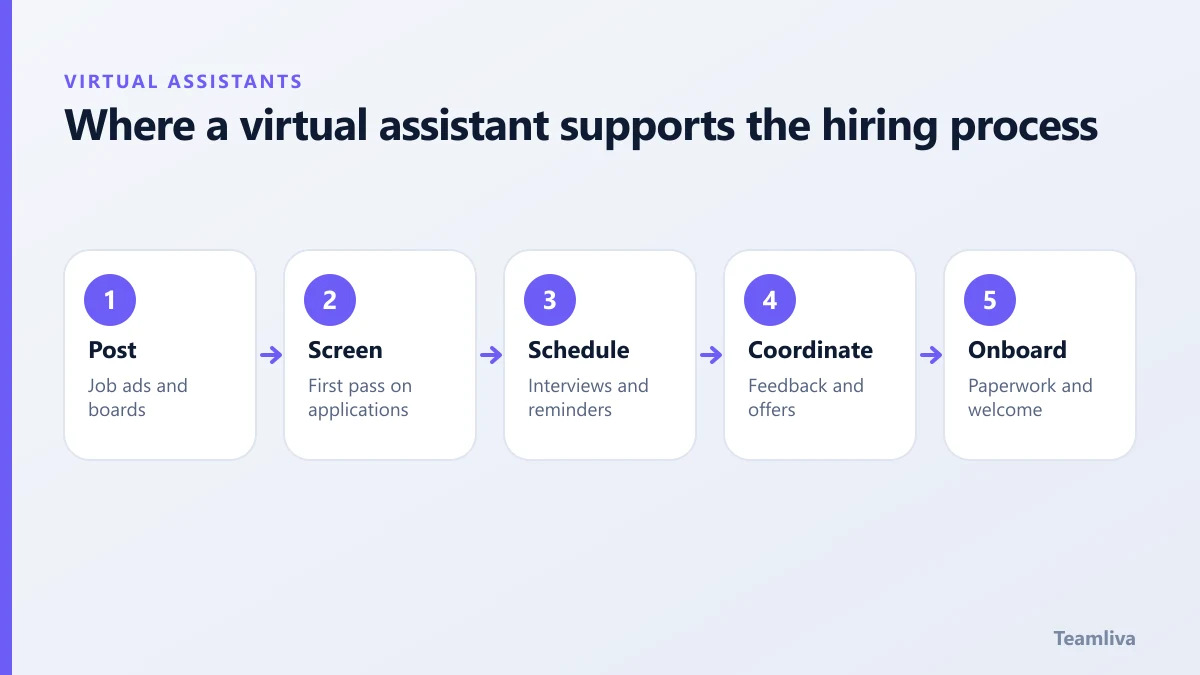
A simple recruitment workflow to hand to a recruitment virtual assistant
- Role kickoff: the hiring manager completes a one-page brief with must-haves and nice-to-haves.
- Posting: the assistant publishes the ad and monitors applications.
- Screening: applications are checked against the must-haves, and a short question form is sent to the shortlist.
- Scheduling: the assistant offers interview slots and sends reminders.
- Feedback: interviewers submit notes in one place within 24 hours.
- Decisions: the hiring manager decides, and the assistant sends approved messages.
- Onboarding: the assistant sends forms, collects documents through a secure channel and prepares the first-week plan.
Improving candidate experience
Candidates remember how they were treated. Reply promptly, explain the steps and dates, and give a clear decline message with thanks. A small investment in communication protects your employer brand and reduces the number of people chasing you for updates.
Fair and consistent screening
- Use the same criteria for every applicant in a role.
- Score against job-related requirements only.
- Keep notes factual.
- Review rejections periodically for patterns you did not intend.
For guidance on fair practice, see the resources at SHRM, and check the employment rules where you hire.
Key takeaways: recruitment virtual assistant
- A recruitment virtual assistant handles the logistics of hiring, while decisions about who to interview and hire stay with your team.
- Write job-related screening criteria and apply them consistently to every applicant.
- Protect candidate data with limited access, multi-factor authentication and retention rules.
- Reply promptly and clearly to candidates, because the experience reflects on your employer brand.
- Use message templates for acknowledgements, invitations and declines to keep quality steady.

Get recruitment support
Teamliva (Team Liva) provides managed virtual assistants for HR and recruitment logistics, as well as staffing solutions. Contact us to discuss your process.
Frequently asked questions
What can a recruitment virtual assistant do?
Post job ads, do first-pass screening against your criteria, schedule interviews, send updates to candidates, collect references and support onboarding paperwork.
Should an assistant make hiring decisions?
No. Decisions should stay with hiring managers. Assistants handle logistics and first-pass checks against clear, fair criteria you define.
- #Teamliva
- #TeamLiva
- #VirtualAssistant
- #VirtualAssistantServices
- #HireAVirtualAssistant
- #RecruitmentVirtualAssistant
- #HrVirtualAssistant
- #CandidateScreening
- #Onboarding